The Proposal: moving from particle to wave to field

Proposal: Guidelines

The real-world, academic model for the SCE you will complete (in your senior year) is a 25-30 page essay that we scholars publish in journals, books, and other venues, based on extensive research (an Annotated Bibliography due in the fall of your senior year) and substantial drafting and revision (the essay composed in the spring of your senior year). You have likely encountered and started to work on initial ideas in other English courses that could serve as the foundation for the SCE. But you probably don’t know it yet.

So, how do we work toward that substantial project, explore a direction before we know where we are going? There are various models scholars use to explore and develop their initial thinking/reading/writing on the way to more substantial, publishable scholarship: sometimes they’ll take the form of a conference presentation, other times a proposal for a grant or fellowship.

For this assignment, you’ll be writing a substantial proposal for future research. At 1750 words or so (inclusive of abstract), it will be on the longer end for SCE proposals in the English department, but this length is common to professional research proposals and as such will give you the space to fully articulate your research findings and your claims in relation to them.

Guidelines:
1500 words + 250 word abstract. Your project proposal should begin with a re-revised abstract summarizing your proposed project. Remember, that proposed project is essentially an academic article, examples of which you’ve been reading all semester. The body of your proposal should:

  • describe the project, explaining the topic and the significance of the argument;
  • place the work in the context of your field (methodological, geographical, and period-based as applicable);
  • indicate how the project would contribute to that field;
  • be clear about the critical theory and methodology informing your argument; and
  • make sure to situate your work in relation to others. You may use *revised* portions of your literature review to do this.

For some further guidance on an Academic Proposal, consult this resource from the University of Toronto.

Proposal: Brainstorming–Particle/Wave/Field

For further development and complication of your project’s argument as it stands now, use this heuristic (in classical rhetoric: a model or structure to generate or organize thinking for an essay, argument, project, a device for invention) known as the particle/wave/field heuristic. I summarize it below by way of the rhetoric book Form and Surprise in Composition:   Writing and Thinking Across the Curriculum by John Bean and John Ramage [they take the heuristic from the Young, Becker and Pike’s Rhetoric: Discovery and Change]. They suggest it as a method that helps develop an argument on a given topic by enabling the writer to switch perspective systematically. 

First, take your topic X  and view it as a static, unchanging entity (particle): note its distinguishing features, characteristics; consider how this entity differs from other similar things. You will know some of these details and characteristics from your research–how other critics and scholars have defined your topic in the past.

Second, view the same topic as a dynamic changing process (wave): note how it acts and changes through time, grows, develops, decays. Think of this as where your Y enters the topic: issues, questions, problems that you might pose, wanting to learn more about the topic, recognizing (from your research and review) that there are some gaps, there is more to know or do with this topic.

Third, view the topic as a Field, as related to things around it and part of a system, network or ecological environment. What depends on X? What does X depend on? What would happen if X doesn’t exist? Who loves (hates) X? What communities (categories) does X belong to? What is X’s function in a larger system? This is a way to identify critical and theoretical implications for your argument–the larger field and conversation that your study participates in, relates to (and lots of other “reverbs”), potentially revises, but also (this is what is complicated about “field”) is potentially revised by.  This is your stake, your “So What.”
Critical Practice: Literature Review

The Literature Review

A “literature review” is an extended analysis of the extant critical discussion surrounding a topic in which you are interested. Often, this topic takes the form “subject in author’s text”: “Parentheses in Walt Whitman’s Leaves of Grass,” “Cannibalism in David Mitchell’s Cloud Atlas,” “Queer desire in Toni Morrison’s Sula.” Any critical analysis of a text—or as Kenneth Burke suggests, any critical thinking about anything—relates new ideas to what’s known, responds to questions or problems, which are themselves in response to what is given. The literature review provides context for the new and the known. It is you listening attentively in Burke’s parlor before you put in your oar.

In our studies this semester, we have seen literature reviews sometimes in the introduction, used to set up the argument before the author presents evidence in the body; we have also seen reviews emerge in the body of an article, used to advance evidence and borrow (and/or distinguish) previous critical readings or theoretical insights. Versions of this component of scholarly composition can thus be found in most of the articles you have read for this class this semester. Going back through the readings and studying these moments, normally towards the beginning of a given article, will be very helpful.

Assignment Guidelines: In approximately 2000 words, review 8-10 critical sources on/around/adjacent to your topic. This might sound like a ton, but do not despair! You do not have to (and indeed, shouldn’t) write an equal amount on all sources. Instead, you should focus on outlining the conversation surrounding your topic in broad strokes: which sources seem to be in agreement? Where is there disagreement? Where are there gaps (or “lacunae,” an academic commonplace) or limitations in the research, and why do you think this is the case? (This is where the review sets the stage for your argument in progress: how you will fill those gaps and respond to those limitations). Which sources deserve lengthier explanation and response, and which can attach to these more major ones as footnotes or asides? Most importantly, what kind of narrative do your sources build: what kind of story do they tell about how this author/text/topic/etc. has been treated?

At the top of your review, provide the latest and most refined version of your abstract (this will take the place of your introduction and provide context for what is motivating this critical review of the literature). At the bottom of the review, provide a works cited list of the secondary sources you are reviewing.

For further guidance on the Literature Review, consult this resource from the University of Toronto. Also, revisit the various critical articles we read this semester and observe how those critics engaged in the rhetoric and poetics of the literature review.

Class Workshop:

Each member of the group will do the following to practice and probe the research you are conducting and reviewing.

  1. Critic: Update your research and literature review
    1. Present the latest version of your elevator pitch.
    2. Select one of your sources and present an oral summary of its argument (think abstract).
    3. Identify the uses and/or limitations of this source: Will it deserve lengthier explanation in your review or briefer discussion, perhaps part of a footnote? Are there gaps in the source you could/should fill in?
    4. Compare this source to a few other sources you have found: what are the points of agreement or disagreement you will discuss in your review of the critical conversation?
  2. Group: Provide feedback on the quality of the source + suggestions for further research.
    1. Does it seem credible and substantial for the project? What else might the critic do in reviewing this source?
    2. What else might the critic explore as they continue to research and finalize the literature review? What do you need to understand better that the critic’s research could address?
    3. Research tips: where might the critic find additional sources?

Abstract

Trauma can span generations. It is not an individual psychological phenomenon, nor one that goes away after the traumatic threat has ended. These facts are established in the psychological community but need to be looked at further by those who study trauma as it relates to postcolonial theory. Postcolonial trauma affects millions of people in postcolonial societies, even long after colonial rule.

Through hereditary trauma, family units feel the lasting weight of colonization, which can negatively affect a family’s psychology. Three literary works have shown this theory: Chimamanda Ngozi Adichie’s novel Purple Hibiscus, Mai Der Vang’s book of poems Afterland, and lê thi diem thúy’s novel The Gangster We are All Looking For. Purple Hibiscus is bildungsroman novel about a young girl, Kambili, living in an abusive household in Nigeria. Afterland is a collection of poems about the Hmong people’s displacement from Laos after the Vietnam War. The Gangster We are All Looking For is the story of a young Vietnamese immigrant whose family has fled to San Diego.

Each of these texts deals with the psychological aftereffects of colonialism. They explore trauma as it relates to the family, both ancestral and living. These texts are examples of how familial ties are shaped and defined by postcolonial trauma. Each text shows through vivid imagery and characterization how colonial violence spans generations, and how necessary transgenerational narratives are to our understanding of postcolonial and trauma theory.

Colonialism is inherently intergenerational, and I argue that postcolonial studies and trauma theory are necessarily intertwined. It is impossible to explore postcolonialism without recognizing the hereditary nature of postcolonial trauma and the effects this trauma has on families today. I explore critical perspectives of postcolonial theory, psychological theory surrounding family trauma, and literary criticism in order to suggest that the motif of family in these texts is used to explore trauma responses to past and current psychological effects of colonization.

Keywords: Family, Trauma, Motif, Postcolonial

Works Cited:

Abubakar, Sadiya. “Traumatic Experiences of Nigerian Women: An Archetypal Representation in Adichie’s Purple Hibiscus.” IRA-International Journal of Management & Social Sciences (ISSN 2455-2267) [Online], Vol. 4.3, 2016.

Adichie, Chimamanda N. Purple Hibiscus: A Novel. New York: Anchor Books, 2004. Print.

Bhattcharjee, Partha, and Priyanka Tripathi. “Ethnic Tensions and Political Turmoil: Postcolonial Reading of Chimamanda Ngozi Adichie’s Purple Hibiscus.” Language in India, vol. 17, no. 3, Mar. 2017, p. 433.

Ha, Quan Manh. “Conspiracy of Silence and New Subjectivity in Monkey Bridge and The Gangster We Are All Looking For,” Journal of Southeast Asian American Education and Advancement: Vol. 8: Iss. 1, Article 3, 2013.

Getting Concrete with your Abstract: messy metonymy

My messy but productive path toward an abstract that became A Liberal Education in Late Emerson: Readings in the Rhetoric of Mind (2019)

X Y Z
Emerson/James/Whitman Emerson’s rhetoric (late work) Emerson/liberal education
Emerson’s rhetoric Emerson/liberal edu


Emerson/James
Emerson/liberal edu Emerson’s rhetoric Emerson/James
Emerson/liberal (and transformation) Emerson/James Emerson’s rhetoric
Emerson/James Emerson (and James)/liberal edu Emerson’s rhetoric
Emerson’s rhetoric [5/21/17] Emerson/James/Whitman/ Emerson/liberal

[5/17]I am working on Emerson’s rhetoric of metonymy [the late rhetorical emerson] to learn more about Emerson’s rhetorical relation to Whitman/James/Eliot so that my readers can better understand/care about Emerson’s engagement with liberal education.

Abstract (from publishers website):

Recent scholarship has inspired growing interest in the later work of Ralph Waldo Emerson (1803-1882) and a recognition that the conventional view of an aging Emerson, distant from public matters and limited by declining mental powers, needs rethinking. Sean Meehan’s book reclaims three important but critically neglected aspects of the late Emerson’s “mind”: first, his engagement with rhetoric, conceived as the organizing power of mind and, unconventionally, characterized by the trope “metonymy”; second, his public engagement with the ideals of liberal education and debates in higher education reform early in the period (1860-1910) that saw the emergence of the modern university; and third, his intellectual relation to significant figures from this age of educational transformation: Walt Whitman, William James, Harvard president Charles W. Eliot, and W. E. B. Du Bois, Harvard’s first African American PhD. Meehan argues that the late Emerson educates through the “rhetorical liberal arts,” and he thereby rethinks Emerson’s influence as rhetorical lessons in the traditional pedagogy and classical curriculum of the liberal arts college. Emerson’s rhetoric of mind informs and complicates these lessons since the classical ideal of a general education in the common bonds of knowledge counters the emerging American university and its specialization of thought within isolated departments.


Eurocentric domination of popular Fantasy

The Postcolonial lens of literature is one that highlights that of stories stemming from the Northern half of Europe, both though historical means but also cultural. Nordicism is a branch of Postcolonialism that specifically finds its way into fantasy literature through the means of mythology. While most fantasy attempts to make an original plot, many also rely on pre-existing mythological groundwork. The fantastical nature of mythology lends itself well to being used in these works of fiction though with that being said this practice is skewed heavily in modern literature. Norse mythology is a dominant factor within fantasy literature that leaves little room for creative ideas from outside of Northern Europe.

Incredibly famous cases of this exist such as Tolkien’s The Hobbit and The Lord of the Rings which go so far as to act as an alternate ancient history to the actual world. These books were written with Norse creatures placed in major roles such as Elves, Dwarves and Orcs. These creatures can often be seen as caricatures for minority groups in the real world such as Dwarves being representative of the Jewish community. Tolkien made the creatures short with large noses and long beards but also gave them the quality of greed. The Dwarves constantly yearn to find more riches in their mines and increase their wealth. Not only this but often find themselves homeless, especially in the plot of The Hobbit where they have been cast away from their homeland. Orcs on the other hand are an unfortunate symbol of Africans. They are described as having dark of black skin but are given little respect throughout the story. They typically act in a hivemind manner due to their low intelligence and acting as soldiers with their brutish strength. Along with this Tolkien sticks to his main characters being white males while also only bringing in people of color as canon fodder for them. Tolkien’s equivalent of Asians and Africans are introduced as wicked men who have sided with a dark lord determined to take over the world. The characters are not used for a greater purpose and die in the process.

Works such as that of Tolkien’s are still consistently being shoveled out in the modern world as well. The Harry Potter books barrow from this idea by focusing in on strictly European mythology. The use of creatures such as Phoenixes, Goblins, Giants and Dragons (specifically western stylized dragons) proves this but not as much as the characters within the story. All of the main characters have been portrayed as white and strictly British even with the setting being well into the globalized time of the 1990s. Most characters of color are sidelined if focused on at all while the Eurocentric white character are given the starlight. This overuse of Eurocentric white washing of fantasy goes beyond just written literature though. It can also be found in popular games such as Dungeons and Dragons or Skyrim.

The fact is that modern fantasy is dominated and obsessed with the classic literature and culture of European roots above all else. White characters, often with British accents, fill the roles of critically acclaimed stories centered around a supposed escape from the real world but fail to move beyond a single continent. Perhaps other cultures should be given the opportunity to share their greatest works of fantasy and expand the genre such as African, Asian and Native American fantasy.

Tolkien, J. R. R. The Lord of the Rings. 50th anniversary 1 vol. ed., Houghton Mifflin, 2005.

Rowling, J.K. Harry Potter

The breakdown of gender hierarchies in Paradise Lost: Applying feminist theory to Milton

In the epic poem Paradise Lost by John Milton, many principles of feminist criticism can be applied to the text. The character of eve is depicted as unequal to her counterpart, Adam, and is placed into a powerless position that she can only break free from by breaking the one rule of Eden-eating from the forbidden fruit or “fruit of knowledge”. It is interesting to see how Milton plays around with gender structures within the text because he sets it up as a typical patriarchal structure but then seemingly breaks it down using a variety of methods. I would also argue that Milton identifies with Eve more than any other character in the text, the only exception being Satan.
In Paradise Lost, in every domain where patriarchy reigns (which is pretty much everywhere), woman is other, and is objectified, marginalized, and defined at times only by difference from male norms. This is true of Eve, as she is unable to sit in on Adam’s conversations with Michael because she is seen as inferior or not as smart as him. When reading this text, it is also apparent that gender issues play a part in every aspect of Adam and Eve’s human experience. Adam and Eve’s relationship is conflicting, because Adam views Eve as his beautiful counterpart, but to the point at times that he may look at her as an object rather than her own person. Eve is aware that she is viewed as an other and takes all of her oppression into account when she decides to eat the forbidden fruit.

The hierarchy between Eve and Adam and Adam and God is first established in Book IV when we see Eve awake after being created. When Eve explains to Adam her first memories of waking up, she tells him “My other half: with that thy gentle hand/Seiz’d mine, I yielded, and from that time see/How beauty is excelled by manly grace” (Milton, 4.487-489). Eve yields to Adam as her authority figure firstly because she was created out of him and that he was created by God, but then also submits to his power since she does not have direct access to God and he does. This hierarchy is essential to Eve’s decision to eat the forbidden fruit because much of her reasoning has to do with her feeling inferior and being at the bottom of her hierarchy. She must obtain her information about anything from Adam, who obtains his information from the angel Raphael, who in turn obtains his information from God. Eve’s access to information is limited, and she is very much trapped in her lowly position. The forbidden fruit poses as her one way to gain more power and rise out of this state. Rather than the person that doomed mankind to sin, Milton instead paints Eve as a hero in a way through her decision to eat the forbidden fruit and one can view the action as her breaking out of her gender hierarchy that she is a part of.

The imagery of darkness and shade in Eve’s story works as a connection to Milton’s blindness. This is one of the ways that Milton identifies himself with Eve as opposed to other characters such as Adam. We also find out in Book XII that Eve gains the same information that Adam received from Michael, but through God in her dreams. This is a clear parallel to Milton who notes in Book XII “in darkness, and with dangers compast round,/and solitude; yet not alone, while thou/visit’st my slumbers Nightly, or when Morn/purples the East: still govern thou my Song” (Milton, 7.26-29). In this way Milton is purposefully attributing his own qualities to Eve, thus making her one the most important figures in driving Milton’s argument.

Sources cited:

Milton, John. Paradise Lost. Complete Poems and Major Prose, edited by Merritt Y. Hughes, Hackett Publishing Company, Inc., 2003, pp. 173–469.

Turning Your Back on the Center

Ligon_Self Portraits

Much of postcolonial criticism roots itself in discourses of the center and marginalization. The way we define the margin and center is, at times, largely contextual, but we can think of the center as historically belonging to heterosexual white men. Of course, this pushes everyone else to the margin—some more than others. Postcolonial indebted to perspectives of critical race theory, feminist theory, queer theory, and many others when it comes to recognizing this station of difference, but only postcolonial theory discusses it in these terms. Because society is generally thought to be constructed by those at the center, it often does not benefit people at the margins in the ways it does those at the center, if not actively causing them harm. We can also say that society often does not “belong” to those at the margins. This raises the issue of displacement, wherein marginalized people are forced to move out of and away from the places they feel they belong. While displacement is often used in a physical sense, it refers to a sense of culture as well.

For many artists of marginalized communities, displacement is an important theme in their work. Feelings of isolation, disconnection, anger, and sorrow all make an appearance, but displacement makes itself known in more nuanced ways as well. Literary genres exist as groupings that we understand somewhat intrinsically, but they all have defining characteristics on which we can mostly agree. Because these genres were often (canonically) contributed to only by those at the center, many of these characteristics are inextricably linked to centralized identity. Artistic genres are no different, and the portrait is one of the oldest. The most common example is the Mona Lisa (1503), and most portraits follow its lead: fine clothing, simple poses, figure facing the viewer, a detailed or extravagant background. Not surprisingly, the majority of famous portraits feature white people from wealthy backgrounds.

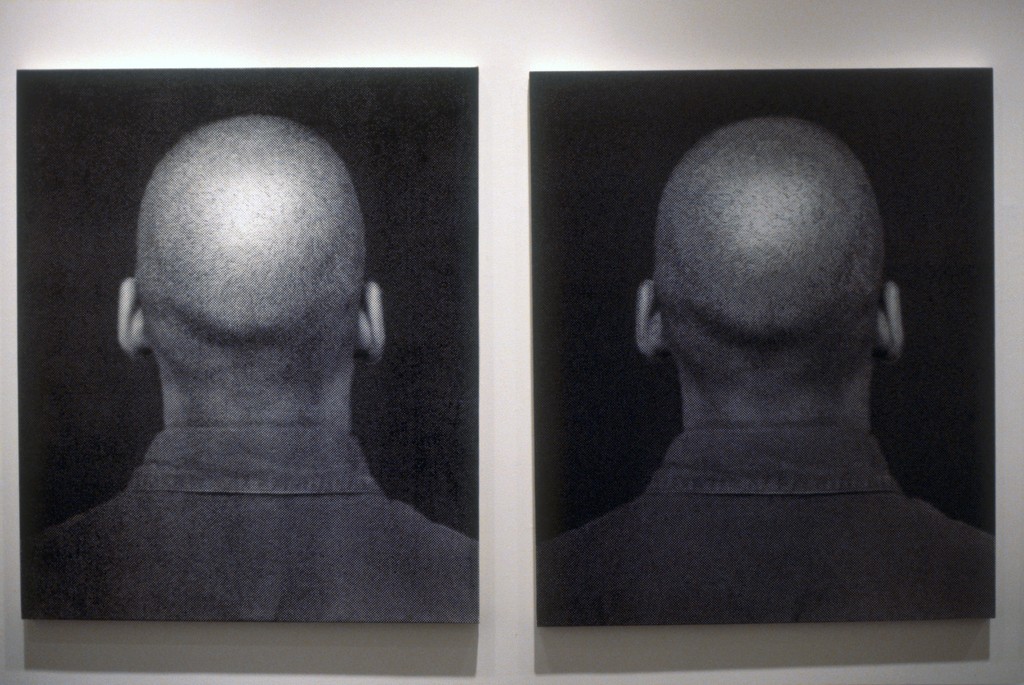
Far from the center, Glenn Ligon is a black queer artist who grew up poor in Brooklyn. His work is indebted to this identity, and by extension, a kind of displacement. He often plays with form and genre, subverting classical artistic notions. His Self Portrait (X) (1996) shows Ligon facing away from the viewer in a plain shirt. It’s a simple pose and a blank background. There’s a lot to analyze in the print, but feelings of despondency and isolation are clear. It’s no stretch to call Ligon’s work an exemplar of displacement. By subverting a genre that was created at the center, Ligon provides us with an artwork that can easily be discussed with postcolonialism in mind.

Glenn Ligon. 1996. Self-Portraits. Prints. https://library.artstor.org/asset/LARRY_QUALLS_10310739840.

History as Commodity: The Disney Company’s Venture into the Story of “Pocahontas”

My further reading this week focused on Marxism, specifically the concept of commodification and how this relates to literature and media. Lois Tyson writes in her book Critical Theory Today that “For Marxism, a commodity’s value lies not in what it can do (use value) but in the money or other commodities for which it can be traded (exchange value) or for the social status it confers on its owner (sign-exchange value)” (59). Tyson defines commodification as “the act of relating to objects or persons in terms of their exchange value or sign-exchange value” (60). Literature is commodified when it is reprinted numerous times and sold. Stories are commodified when they are turned into easy-to-sell forms of media, such as the multi-billion-dollar movies made by the Disney company. Disney is one of the largest media companies in the world, worth (at the time of my writing) 132.75 billion US dollars. They have bought so many media franchises that they are in competition with themselves and have essentially created their own superstructure. A superstructure is the dominant cultural and societal institutions that result from a society’s economy. The dominant narrative in children’s media, both in movies, TV shows, and games, is largely controlled by Disney. Disney capitalizes off these stories through their amusement parks, through toys, clothes, music, and even healthcare products. But what they really sell is, essentially, stories.

Most of the popular stories that have become their most famous and best-earning movies are those taken from popular literature and commodified, that is, turned into a product which has the purpose of making money and furthering Disney’s reputation. Sleeping Beauty, Snow White, and even the more recent The Princess and the Frog are based on fictional retellings of fairytales. However, not all Disney movies come from fairytales. The plot of The Lion King is largely based on Shakespeare’s Hamlet. Their animated film Pocahontas, however, is a retelling of a historical event—one that makes drastic mistakes in their narrative and commodifies a story of oppression into a family-friendly movie designed for capital gain. When companies like Disney and Universal own stories, they own control over dominant narratives. They hold the power to write history out of existence in popular knowledge.

According to Smithsonian, an institution which tells more accurately researched stories of history, Pocahontas was born Matoaka. Unlike in Disney’s film, she was not an eighteen-year-old who fell in love with the dashing John Smith after saving him from death by her father and lived happily ever after. She was the Great Powhatan’s daughter, who was captured by settlers, married John Rolfe and was paraded around Europe as an example of a “good” Native American until her untimely death at 21. Her story is a sad one, of a talented young translator’s death at the hands of a colonizing society. Disney’s retelling romanticizes her story for capital gain in an inauthentic and disrespectful fashion.

When the authenticity of Pocahontas’s story is damaged, the historical aspect of the story is lost in its reproduction. Walter Benjamin says in The Work of Art in the Age of Mechanical Reproduction that “The authenticity of a thing is the essence of all that is transmissible from its beginning, ranging from its substantive duration to its testimony to the history which it has experienced. Since the historical testimony rests on the authenticity, the former, too, is jeopardized by reproduction when substantive duration ceases to matter. And what is really jeopardized when the historical testimony is affected is the authority of the object” (Walter Benjamin 2).

The prominent idea of Pocahontas in mainstream media, because of Disney’s commodification of her story, is historically inaccurate. The reason this idea still persists despite its inaccuracy is because of Disney’s status as a superstructure. A Marxist critic believes that companies who hold financial power control the knowledge that we learn through media, and this explains why Pocahontas herself—the real woman, not the Disney Princess—is so misunderstood today.

A Disney Animator’s Collection Pocahontas Doll- Priced on Target.com as $92.99.
source: Google Images

Works Cited

Tyson, Lois. Critical Theory Today: a User-Friendly Guide. Routledge, Taylor & Francis Group, 2015.

Mansky, Jackie. The True Story of Pocahontas. Smithsonian.com, March 23, 2017.

Benjamin, Walter. The Work of Art in the Age of Mechanical Reproduction. Schocken/Random House, 1998.

Water Horse Racing and Feminism

The Scorpio Races centers around the protagonist, Puck, who is forced to enter her island’s Scorpio Races to earn the money needed to pay to keep her family’s house. The island that she lives on, Thisby, holds the Scorpio Races every year, except it is an event only meant for males to take part in on the island’s dangerous water horses. Not only does Puck fight to be the first woman to compete in the races, but she decides to race on her own personal horse instead of one of the water horses.

A feminist reading of the text can be clearly applied given that Puck is a woman trying to establish herself in a traditionally male environment. However, a deeper application can be applied in looking closer at the details in the text. Tyson states that for men, “failure to provide adequate economic support for one’s family is considered the most humiliating failure a man can experience” (83). In The Scorpio Races, the whole reason that Puck enters the races is because her brother Gabe is unable to support the family through the various jobs that he has picked up around the island. Since their parents are deceased, not only is her brother unable to fill his role as provider for his siblings, but Puck has to step into a traditionally male role of breadmaker in order to provide financially for herself and her siblings since her brother is unable to.

Due to the traditionally established gender roles in the races and on Thisby though, Puck faces multiple challenges in achieving this role. Tyson states, “Our gender strongly influences how we are treated by others and by society as a whole” (103), and that one gender studies issue is the “patriarchal assumptions about gender and gender roles that continue to oppress women” (103). Throughout the story, Puck is repeatedly told and actively attempted to be removed by the men on the island from competing in the races. The only reasoning given is that “No woman’s ridden in the races since they began” and that “There are rules on paper and rules too big for paper” (Stiefvater 195). Combined with the overall lack of female characters in the text- the only other women are the butcher’s wife and three elderly sisters that hold a fairy-godmother like role in Puck’s life- the text itself is male dominated. And even the butcher’s wife has more masculine traits attributed to her.

By creating such a male dominated text for such a male dominated event, it really displays the oppression that Puck continually finds herself up against simply for being a woman. Puck ends up befriending and training with previous year’s winner of the races after having earned his respect. Throughout the race, he then remains by her side to help protect her from the other competitors, and she ends up winning the races. While her ability to win the races implies that patriarchal beliefs can be overcome, there is also the implication that this shift cannot occur without the help of powerful men. She is only able to win the race because she had training and protection throughout the process and the race itself from the previous year’s winner.

Interestingly enough, another feminist aspect of the text that could be further explored is the role of woman in island mythology compared to the current role of women on the island. The mare goddess that the island recognizes as part of the myth that contributes to the island’s ability to produce water horses is female and much of the ceremony surrounding the races is centered on honoring this goddess. However, the goddess’s role and perceived power is vastly different from the treatment that Puck receives as she tries to participate in the event.

Works Cited

Stiefvater, Maggie. The Scorpio Races. Scholastic Press, 2011.

Tyson, Lois. Critical Theory Today: a User-Friendly Guide. Routledge, 2015.

Gender in R E D

Feminist theory, and by extension queer theory because it was built out of feminist theory, put an emphasis on the role, and importance, of gender in a work. This can take many forms, exploring the number of female characters, the quality of those characters (for example, whether or not they have agency and autonomy and, if they don’t, what that implies for the text), the portrayal of those characters, if and how they conform to gender norms (and if they don’t in what ways they break the norm and if they must face any “consequences” for their actions), and much more. By exploring these things, a reader gathers information about not only the text, but can begin to extrapolate the importance of representation and diversity to the author. While this may not be universally applicable (meaning one can’t/shouldn’t always assume that an author is sexist because their female characters are flat or nonexistent (but they should definitely do better)), it is interesting to analyze instances in which the author is explicitly interested in and driven by their female characters and how they are being portrayed.

What is so interesting to me about Chase Berggrun’s book of poetry, R E D, is the way she explores gender and feminism through the act of erasure. R E D is a book of erasure poetry, the source text of which is Bram Stoker’s Dracula. Berggrun, using a very specific formula that she created, physically blacked out Stoker’s original words and narrative from Dracula and created her own that gave the female characters much more agency and autonomy than they previously had. By doing this, the former story is erased and replaced with a much more empowering one.

This, immediately, relates back to feminist theory because of the agency the characters have in R E D that they were lacking in Dracula–the poems are centered around the women and focused on them. Rather than remaining background characters, they come center stage and take the focus from the male characters (including and especially Dracula himself).

What makes R E D so effective is not just the complete erasure of Dracula to create an entirely new narrative, but that Berggrun herself uses R E D to explore her own femininity and womanhood during her transition (she says this in what functions as an introduction, contextualizing the book and explaining how it functions). This adds another dimension to the role femininity plays within the text because the reader immediately understands that the stakes are not just about erasing what is universally understood as not feminist text, but erasing it to give a voice to female characters while the writer is examining and exploring her own femininity.

Berggrun, Chase. R E D. Birds, LLC, 2018.

Applying African American Critical Theory to Faulkner’s “A Rose for Emily”

William Faulkner’s story “A Rose for Emily” is written from the perspective of the people of her small town. They wonder and marvel at her odd behavior, reclusive existence, and eventually at the horror of the corpse in her bed. The story’s setting of post-Reconstruction Mississippi, the mention of Miss Emily Grierson’s ancestral claim to Antebellum aristocracy, and her romance with a northern carpetbagger could call for a close African American Critical Theory reading of the story in and of themselves. But where this critical theory could best be applied in this story is to the oft-overlooked character of Tobe.

Tobe is described as Miss Emily’s servant who does her shopping, her gardening, and the housework. He is also her intermediary at times with the curious townsfolk when they dare not approach the imperious woman directly. Where Tobe is the most compelling is in his role as Miss Emily’s secret keeper. When Emily poisons Homer Barron and keeps his body in her own bed to lay beside until her own dying day, Tobe does not call the authorities. In fact, Tobe himself may have played a role in the man’s demise. Faulkner tells us, “A neighbor saw the Negro man admit him at the kitchen door at dusk one evening” (“A Rose for Emily”). When Emily dies, Tobe admits the authorities to the house and quietly flees, never to be seen again.

Some scholars have suggested that perhaps Tobe didn’t like Miss Emily enough to stick around for her funeral. They overlook some of the crucial factors that African American Critical Theory asks us to examine. The politics of the era in which this story is set are complex.

After the Emancipation Proclamation, southern slaves found themselves “freed” in a south where the war had ravaged the economy and families. With few viable options for employment, some remained with their prior owners in the homes and on the land that may have been the only they had ever known. Tobe is described in the story as being elderly, so not many avenues of employment would be available to him. He may have been the Grierson family’s slave and was likely the child of slaves. Tobe’s options for other places to go were extremely limited, as no mention is made of him having family. He also may have wisely feared repercussions for his role in Homer Barron’s death.

It is telling, too, that it doesn’t seem to have occurred to scholars or the townspeople in the story that it was possible that Tobe and Miss Emily were more than boss and servant, or murderer and accomplice, or co-conspirators. The fact that it does not occur to many that Tobe and Miss Emily may have been lovers is also a reflection of the politics of the time in which the story is set and even the biases of the time in which we now live. Tobe’s steadfast loyalty, refusal to divulge secrets to the townspeople, and disappearance upon her death could certainly be interpreted as the actions of a man who loved her.

“Fringe” characters like Tobe, without whose participation the events of stories like this could never happen are too often overlooked. Scholars have a responsibility to reexamine texts like these through the lens of African American Critical Theory. Because without characters like Tobe, there is no story.

Works Cited

Faulkner, William. “A Rose for Emily.” A Rose for Emily, American Studies

at the University of Virginia,

http://xroads.virginia.edu/~drbr/wf_rose.html.

Fall of the VEmpire

A big part of postcolonial criticism is colonialist ideology.  It emphasizes the superiority of European colonizers while othering the colonized (Tyson 400-401).  It’s a way to justify the colonization, and the subsequent cruelty, enacted by the colonizers.  To keep this myth alive, they taught colonialist ideology to the conquered people. This leads to a desire to assimilate from the colonized, who practice mimicry (Tyson 403), imitating the ways and culture of their conquerors out of shame and a desire for acceptance.  By othering the colonized, the colonizers also refuse to address their own vulnerability to conquest. Only “others” are weak enough to be conquered by a great nation like ours, they say. We are too strong and powerful. We’re immune because we’re superior, and we’re superior because we’re immune.  

But what happens when the colonizers are doing the mimicry to insert themselves among their victims?  And what happens when the colonized and the colonizer are on the same continent? Most literature about colonialism (encouraging or condemning) doesn’t explore these sticky spots.  

Bram Stoker’s Dracula has been called an allegory for colonization, but it pushes the traditional colonization narrative.  The titular vampire emigrates from Transylvania to England in an attempt to start a vampire empire there, like a colonizer.  When he travels, he brings coffins of soil from his home country because as a vampire, he’s unable to sleep on any other dirt than his own.  This calls to mind immigrants (or colonists) bringing aspects of their culture to the places they settle in to establish a cultural foothold.  On the flip side, Dracula works hard to pass as British. He asks protagonist Jonathan Harker to stay with him so Dracula can study and imitate the Englishman’s pronunciation, syntax, accent, diction, and speech patterns.  This is much more insidious than overt colonization, where the colonizers make no effort to assimilate. Dracula pretends to be a fully English human while secretly planting the seeds for a Transylvanian vampire colony to conquer the English humans.  It throws a wrench in traditional colonialism narratives because we have one European country attempting to colonize another European country, instead of a European country attempting to colonize a nonEuropean country. Also, the colonizer is thwarted.  I see the novel as both a colonialist narrative, suggesting the superiority of England since it resists being colonized (the immunity-superiority loop I mentioned above), and an anti-colonialist narrative, showing the limits of European colonizing power.  It’s also anti-colonialist by making the colonizer the other: the would-be-colonized English are members of the “superior” race while the colonizers are blood-sucking, inhuman villains. It’s a fitting, and condemning, metaphor for colonization, which drains labor, life, and resources from the colonized.  

Works Cited

Tyson, Lois. Critical Theory Today. 3rd ed., Routledge, 2015.

Grappling with the Patriarchy, Socially and Economically

According to Critical Theory Today, the big concern in materialist feminism is how women are economically and socially oppressed (Tyson, 93-94). Colette Guillaumin notes that women are expected to give up their personal time and the products of their bodies (hair, milk, children), while being obligated to provide sex to men and care to their family members (cited in Tyson, 95). This is made more complicated by considering class as well; for example, higher class women do less domestic work than lower class women due to the ability to hire paid help. However, all women experience this appropriation, as Guillaumin calls it, to some extent. My interest is in how women subvert, exploit, or otherwise rage against the expectation that they are supposed to give, give, give to men.

There is a compelling line in the materialist feminism section of the text that inspired me: “Women’s sexual obligation to men occurs in both marriage and in prostitution. For Guillaumin, the primary difference between the two is that time limits are placed on a man’s use of prostitutes, and he has to pay for the specific acts he wants” (Tyson, 95). Within the patriarchy, we see a limiting duality to womanhood: “good girl” or “bad girl.” Now the bad girl, the whore, is socially disparaged, but this quote suggests she has more economic power than her counterpart because men have to meet her on her terms. This is precisely why she’s disparaged, because the patriarchal male considers her a threat to his absolute power (Tyson 86). So the text gave me one very overt answer to my question, but the thing that snagged me is that prostitutes do not have much social power. The choice between “good girl” and “bad girl” seems to be a choice between which appropriations to attempt to reclaim, the social ones or the economic ones. We know women are not actually this dichotomy, but how do they present their complexities in a way that men are forced to acknowledge? Better yet, is that even possible under a patriarchy?

This week, I looked for my answers in Thelma & Louise, and I came to the tentative conclusion that this is possible for women to achieve this presentation, but it is difficult to sustain. In Thelma & Louise, Thelma starts out as the “good girl,” keeping house and submitting to her asshole husband’s authority. She has little independence from him, and she’s expected to put all her time and energy into tending to his lifestyle needs. Meanwhile, Louise is more of the “bad girl.” While not a prostitute, she supports herself, and she has agency outside of a man from the beginning. This dichotomy quickly starts to break down once, as neither woman fits wholly into either type of women. Thelma cheats on her husband and robs gas stations, completely flipping her social and economic “goodness” on their head. At the same time, Louise asks her boyfriend for a loan and tries to figure out a solution to their problems. This comes to a head at the end of the movie. The audience knows that Thelma and Louise are complex people… and then they die. More precisely, the process through which their humanity and personhood came to light leave them in a place where choosing to die is better than any alternative.  

Tyson, Lois. Critical Theory Today. 3rded., Routledge, 2015.

Thelma & Louise. Directed by Ridley Scott, Metro-Goldwyn-Mayers Studios Inc., 1991.

Feminist Criticism and the STEM push

One of the biggest places where I’ve seen a big feminist perspective is in science and math in schools.  In the Feminist criticism chapter of Critical Theory Today, Tyson focuses heavily on what girls are told they can and cannot do as children. (Tyson 82-83)  Her biggest example is the subject of mathematics and how most girls are told that they will never be good at math and don’t need to study the subject. (Tyson 83)  While this may have been true for Tyson’s childhood, it was certainly not true for mine. 

As I was going through school, I was experiencing the culture shift from pushing girls away from math and sciences to pushing them into it.  Throughout middle and high school, teachers and administrators would push the STEM (Science, Technology, Engineering, and Mathematics) program onto as many students as they could.  My little sister’s class had a huge focus on computer programing.  Our culture seems to have gone through a huge shift in the past few decades, from telling women that their place is in the home and doing domestic work to actively encouraging young girls to seek employment in fields where they would not have been welcome a generation ago.  Many people have criticized the science, engineering, and computer programing fields as being too male dominated and as it being a place that women need to break into.  My school advertise these subjects by telling the female population of the school that they would have more opportunity in those fields because of how male-dominated they were.  My high school specialized in their STEM program and had a focus on ‘getting girls into STEM.’  They would tell girls that they could do STEM related careers just as well as their male counterparts. 

This shift falls under feminist criticism because of the focus on making sure that women in this field are becoming seen, heard, and celebrated.  Women who go into these fields are seen as rebelling against the patriarchy because they are making a space for women in a previously all male space.  This new enthusiasm for women in STEM is also trying to dismantle the sexism that was previously present in these fields, such as Tyson experiencing young girls being told they couldn’t do math.  It is promoting women’s equality by showing that women can excel across a variety of different fields and by creating workspaces that have a more equal division of genders in STEM related fields.  I find this criticism so interesting because of how quickly it took effect.  Just with in the past two generations, it was odd for a woman to have a job that wasn’t nursing or teaching, but now we are heavily encouraging our young girls to pursue as many career paths as are available to them.

Tyson, Lois. Critical Theory Today: a User-Friendly Guide. Routledge, Taylor & Francis Group, 2015.

Can We All “Be the Cowboy?”: Ehrlich, the University of Wyoming, and Alt-Rock Sensation Mitski Say Yes

When reading the chapter in Critical Theory Today about feminist criticism, many of the topics and key words introduced were very familiar to me. I am currently taking a course on modernist women writers, so we often discuss the subversion of traditional gender roles within the texts and how we as readers can track the progression of feminism through literature. However, while reading this chapter I realized that I have never really paid much attention to traditionally gendered terms themselves, I have only been using these terms in order to analyze a text. Especially when looking at how traditional gender roles “cast men as rational, strong, protective, and decisive” and women as “emotional (irrational), weak, nurturing, and submissive” (Tyson 81), I am interested in how gendered terms can be used to perpetuate or subvert these connotations.

Obviously, our society functions on the basis of binaries in order to maintain some form of organization and distinction, but language in itself consists of banal words and letter that we communally assign meaning to: there is nothing inherently female or feminine about the word pink, but we use the color to distinguish between females and males at birth and then we associate the term and the color with females in all other ways. Because our society would fall apart without language, we as readers and critics cannot take the connotations and denotations of terms lightly. With this in mind, I am interested in looking at how feminist criticism can be used as a lens to view certain terms that are being used in a universally, ungendered way by literature, musicians, and even universities. This term? “Cowboy.” I will start my exploration with Gretel Ehrlich’s androgynous view of the cowboy in The Solace of Open Spaces and then move into the University of Wyoming using the tagline “The world needs more cowboys” in 2018 before tying my interrogation together with the use of the term “cowboy” in mainstream music in 2018 and 2019. With the explosion of the term “cowboy” and all the associations the word carries with it, I think that feminist criticism will allow me to see not only the progression of the term, but it will give me insight into how the term has gone through this sort of evolution. Just as how a character can subvert traditional gender roles in a text, why can’t a term subvert those same gender roles in a society? 

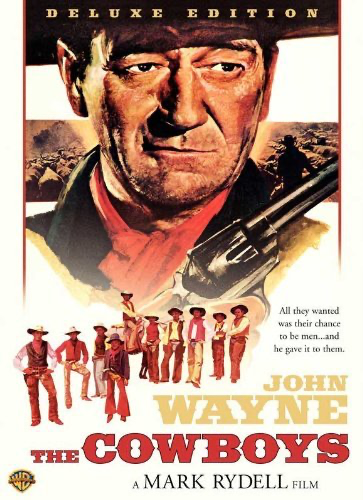
In her chapter titled “About Men,” Ehrlich deconstructs the myth surrounding the American cowboy. Instead of perpetuating the legend of the cowboy, Ehrlich explains that if the cowboy is “gruff, handsome, and physically fit on the outside, he’s androgynous to the core. Ranchers are midwives, hunters, nurturers, providers, and conservationists all at once” (51). Ehrlich’s perspective of the cowboy completely challenges the traditional view of the cowboy as hardened shell who is ruthless and capable of any task. Really, the cowboy that we associate with this term refers more to the John Wayne’s of Western cinema rather than vaqueros. Ehrlich exposes the vulnerability of the cowboy in a way that opens the term up to be used for women as well by describing the cowboy as someone who can be a midwife and a nurturer, terms that are traditionally associated with women. If we as readers look at this redefinition of the term cowboy, it is interesting to see how the term can then be used to refer to both men and women in an ungendered way.

The University of Wyoming in 2018 latched onto the tagline “The world needs more cowboys.” While many feminists criticized this phrase and its inherent “manliness,” the claiming of the term by women can also be seen as a step toward equality. Regardless of how the term is used, it is very interesting to see how one single term can come to represent something so polarizing.

Especially with a term that has such a strong connotation behind it—it instantly makes one think of wild horses and wide open landscapes and hard labor—it is perhaps not all that surprising that a few female musicians have started to use the term “cowboy” within their music and simultaneously subvert the meaning of the term while also using the traditional sense of the term to validate their work. For instance, alternative musician Mitski Miyawaki released her latest album in 2018 titled “Be the Cowboy.” As a female, Asian musician, her decision to include the word “cowboy” in the title of her album certainly is a statement. In terms of feminist criticism, this decision is ingenious: it not only defines the term cowboy to include any person of any gender, age, or race, but it also show’s Mitski’s fearlessness and power as a musician and individual. To be able to claim a term that would have excluded anyone like Mitski in the past gives her the power of the term and then some, as Ehrlich says, “To be tough is to be fragile; to be tender is to be truly fierce” (44). Of course, many of the analysis I have discussed moves past the ideas of feminist criticism and uses deconstruction and even structuralism in order to make this argument cohesive and comprehensive. I do not think that feminist criticism alone can be used to discuss the gendering of terms, especially in pop culture today. Context, of course, is needed to understand the connotations surrounding the term “cowboy.”

Ehrlich, Gretel. The Solace of Open Spaces. New York, Penguin, 1985.

Tyson, Lois. Critical Theory Today. 3rd ed., Routledge, 2015.