Lois Tyson tells us in Chapter 9 of “Critical Theory Today” that
New Historical Criticism prevents us from fully appreciating the context of the time in which we live, because we are part of the mechanism of that historical context. Society influences people who influence history that influences society. Culture is so interconnected that every action is shaped by or a response to the time and society in which we live. The reactions of artists then become part of the creative tapestry of their time.
Tyson explains, “our subjectivity, then, is a lifelong process
of negotiating our way, consciously and unconsciously among the constraints and freedoms offered at any given moment in time by the society in which we live” (270).
The texts of authors who frequently revisit their own works reflect this
process of navigating one’s own changing subjectivity. Over the course of her professional life, Marianne Moore whittled her 1919 poem “Poetry” down from the original 29 lines to merely 3.
“I too, dislike it: there are things that are
important beyond all this fiddle.
Reading it, however, with a perfect contempt for
it, one discovers that there is in
it after all, a place for the genuine.” (Moore,
1919)
As Moore navigated the world in which she lived and her own changing
subjectivity, she distilled her thoughts down and became more concise. She decided that the introductory lines of “Poetry” accomplished what she needed them to and did away with the other 26 lines. Many aspiring poets likely cringe at the idea of lopping off so many lines of well-worded imagery and commentary on the form, but Moore understood that they weren’t necessary to her point and may have even undermined the crucial message of those first lines by being a distraction. With only three keenly honed lines, her message was likelier to strike true in the mind of the reader.
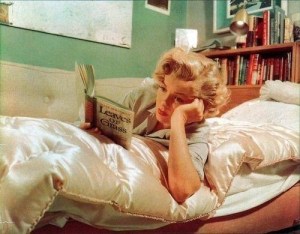
Conversely, Walt Whitman’s “Leaves of Grass” ballooned over his lifetime. He not only edited his original 12 poems, the quantity of poems ballooned. The last edition he released before his death contained over 400 poems. He also shuffled and reordered his poems. Increasingly, his poems dealt with death and mortality as he considered his legacy. Rather than refine his texts like Moore, he bolstered them with other works. He lived in a perpetual state of reaction to his time and to his own life.
Moore and Whitman, as part of history, interacted with the changes in the world as they happened and reacted to them. The democracy of New Historical Criticism allowed both the daughter of a single mother and a son born to economically challenged parents to not only reflect on the eras in which they lived, but to shape the perception of those eras. Moore and Whitman are threads in the fabrics of their respective times.
Works Cited
Moore, Marianne. “Poetry by Marianne Moore – Poems | Academy of American Poets.” Poets.org, Academy of American Poets, https://poets.org/poem/poetry.
Tyson, Lois. Critical Theory Today: a User-Friendly Guide. Routledge, Taylor & Francis Group, 2015.
 Creative Reading