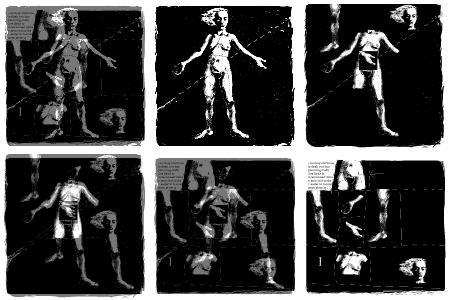
 Where, when, how, why, and in what forms do we experience gender and sexuality in life? In literature and culture–in other words, as readers/writers/scholars in English? Much as we discussed recently with postcolonial criticism and its overlapping interest in issues of race, I propose that we interrogate how various concepts and keywords from feminist criticism, gender and sexuality studies, and queer theory speak to our experiences with literature and culture.
For a possible application this week, I turn our attention to the writer Shelley Jackson. Her work brings to mind several concepts and issues that intersect with the reading this week, perhaps most prominently the idea of “ecriture feminine” from Cixous and French feminism: a writing that is “fluidly organized and freely associative” and and “resists partriarchal modes of thinking and writing” (Tyson 96).
Jackson engages with this and other critical theories while also performing it in her hypertext novel Patchwork Girl, her imaginative rewriting and extension of Mary Shelley’s Frankenstein. Unfortunately, you need special software to “run” this computer-based novel (and my copy is out of date). To get a sense of how hypertext reads, take a look at Jackson’s essay/memoir “My Body”–this one you can read since it is on the web. And here is Jackson writing about hypertext and Patchwork Girl, in a critical essay “Stitch Bitch.” Notice how she describes hypertext as a “feminine” writing:
Bad writing is all flesh, and dirty flesh at that: clogged with a build-up of clutter and crud, knick-knacks and fripperies encrusted on every surface, a kind of gluey scum gathering in the chinks. Hypertext is everything that for centuries has been damned by its association with the feminine (which has also, by the way, been damned by its association with it, in a bizarre mutual proof without any fixed term). It’s dispersed, languorous, flaunting its charms all over the courtyard. Like flaccid beauties in a harem, you might say, if you wanted to inspire a rigorous distaste for it. Hypertext then, is what literature has edited out: the feminine. (That is not to say that only women can produce it. Women have no more natural gift for the feminine than men do.)
Another text by Shelley Jackson extends her interest in the intersectionality of writing and gender and the body in some remarkably vivid ways. Check out “Skin: A Mortal Work of Art,” a text published on the bodies of 2095 volunteers.
Jackson’s work as a contemporary writer and performance artist might be something to pursue for further research, perhaps an SCE project. But even if we don’t want to study a contemporary writer thoroughly engaged in the issues and actual texts of feminist and gender theory (she quotes Derrida, Cixous, and others in Patchwork Girl), how might concepts from those theories apply to other texts and authors elsewhere in our study of English, even works that might not seem to be particularly relevant for thinking about gender and sexuality. As we discussed last week, at the very least, we can seek out our necessary “counter-discourse.” And in the process, we might discover that a work in question is more gendered or queer than we first assumed.
For example, we could return to Emerson’s “American Scholar” and give more thought to his gendering of the scholar, ‘Man Thinking.” What are the implications? What questions and problems regarding this passage do the critical theories of gender and sexuality help us identify? Are there gendered or queer or, as Halberstam puts it, “trans*” readings of the passage we could or should consider?
It is one of those fables, which, out of an unknown antiquity, convey an unlooked-for wisdom, that the gods, in the beginning, divided Man into men, that he might be more helpful to himself; just as the hand was divided into fingers, the better to answer its end.
The old fable covers a doctrine ever new and sublime; that there is One Man, — present to all particular men only partially, or through one faculty; and that you must take the whole society to find the whole man. Man is not a farmer, or a professor, or an engineer, but he is all. Man is priest, and scholar, and statesman, and producer, and soldier. In the divided or social state, these functions are parcelled out to individuals, each of whom aims to do his stint of the joint work, whilst each other performs his. The fable implies, that the individual, to possess himself, must sometimes return from his own labor to embrace all the other laborers. But unfortunately, this original unit, this fountain of power, has been so distributed to multitudes, has been so minutely subdivided and peddled out, that it is spilled into drops, and cannot be gathered. The state of society is one in which the members have suffered amputation from the trunk, and strut about so many walking monsters, — a good finger, a neck, a stomach, an elbow, but never a man.
Man is thus metamorphosed into a thing, into many things. The planter, who is Man sent out into the field to gather food, is seldom cheered by any idea of the true dignity of his ministry. He sees his bushel and his cart, and nothing beyond, and sinks into the farmer, instead of Man on the farm. The tradesman scarcely ever gives an ideal worth to his work, but is ridden by the routine of his craft, and the soul is subject to dollars. The priest becomes a form; the attorney, a statute-book; the mechanic, a machine; the sailor, a rope of a ship.
In this distribution of functions, the scholar is the delegated intellect. In the right state, he is, Man Thinking. In the degenerate state, when the victim of society, he tends to become a mere thinker, or, still worse, the parrot of other men’s thinking.
In this view of him, as Man Thinking, the theory of his office is contained. Him nature solicits with all her placid, all her monitory pictures; him the past instructs; him the future invites. Is not, indeed, every man a student, and do not all things exist for the student’s behoof? And, finally, is not the true scholar the only true master? But the old oracle said, `All things have two handles: beware of the wrong one.’ In life, too often, the scholar errs with mankind and forfeits his privilege. Let us see him in his school, and consider him in reference to the main influences he receives.
My subtitle echoes the title of an important theoretical work in gender and sexuality studies by the philosopher Judith Butler, Bodies that Matter: On the Discursive Limits of “Sex.”
Tyson refers to some cultures that do not have a male/female gender binary. Here is discussion of a photographer exploring that with regard to Tahitian culture.

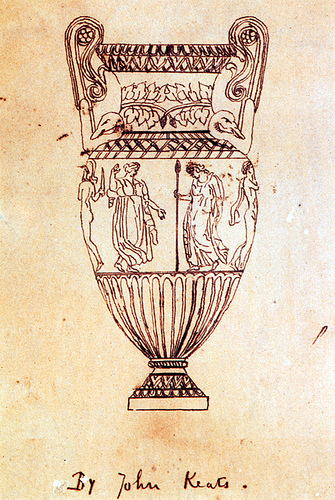 Is there a text in this class? That’s a famous line (and title) from reader-response literary theory, coming later in the semester. For the first two weeks of our exploration of critical theory, the answer to that question is decidedly: “yes, there is only text in this class.” Beginning with the New Criticism, one of the oldest of the critical/literary theories we will study, and then continuing into structuralism and deconstruction, scholars and critical readers focus thoroughly and rigorously and entirely on texts. Although those texts are produced by authors who live in various historical contexts and bodies, and are read by readers who also live in various and different historical contexts and bodies, New Critics, structuralists, and deconstructionists will exclude those other contexts and focus on (a refrain) “the text itself.”
 Creative Reading
You must be logged in to post a comment.