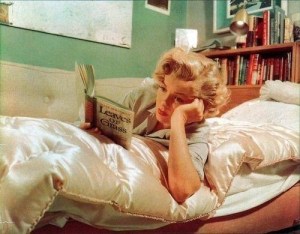
Lesser Known Keats, Refined

I am still interested in Keats’ lesser known poetry, namely the poems from his collection published in 1817, as well as individual poems that were published in 1816. These are the earliest of his poems, and they are quite distinct next to his famous odes, which were mostly written in 1819-1820. Thus, this project now specifically acknowledges that these works were his early works, though I implied as much in my last pitch. I am still interested in examining the literary discourse around these works in Keats’ own moment and now, as I have found minimal discussion in both periods. This discussion is dwarfed by the conversation around the poems Keats wrote later. At the least, though, these poems are practice for the odes. More likely, in my opinion, they are genius of their own. In looking at the little criticism around these lesser known works, and the relatively large lack thereof, I want to get to the core of what Keats’ “genius” actually is and how these poems feed into that rather than detract from it. I believe this will create a more dimensional and cohesive understanding of Keats’ entire body of text, rather than finding certain pieces in contention with each other or simply not acknowledging large sections.

 Since there is an element of examining the criticism around Keats’ work over the past two hundred years, I believe there is a historical and/or cultural context here that is working for some of his poems and perhaps working against other. I plan to implement New Historicism in parsing this out. I think perhaps part of the answer to the secondary question of what Keats’ genius is could lie in that as well, but I also feel like there’s another type of criticism that would be useful for specifically outlining that. I’m not sure about any of the ones we have studied already right now.

As for an additional source, I found an old examination of two critiques that came out when Keats first published his initial collection. This gives me a clearer idea of what people were thinking at that time and why, specifically in terms of Keats in relation to other poets. This relationship to the other Romantics, who seem to have cast a long shadow over Keats, could very well be relevant to why these works are left relatively untouched.

Additional Secondary Source

 Cornelius, Roberta D. “Two Early Reviews of Keats’s First Volume.” PMLA, vol. 40, no. 1, 1925, pp. 193–210. JSTOR, www.jstor.org/stable/457276.

Keats and the Poems You Haven’t Heard Of

I am interested in examining John Keats’ lesser known poetry, including but not limited to “Two or Three,” in order to gain insight in to why the literary discourse around such a popular poet is silent about them, and then to determine if these poems are worthy of the attention and consideration that Keats’ odes are. These “lesser” poems contain a picture of Keats, as a person and a writer, that could be valuable when examining all of his work. Furthermore, it is my suspicion that Keats’ earlier, less technical, more playful works will be important on their own, at least because they will show how Keats developed into the writer he was at the end of his life. There is also, in my opinion, merit in frivolous content so long as it is not entirely devoid of meaning.

In terms of relevant critical theory, structuralism could be used in the comparisons to his entire canon. There will need to be some biography and history involved. Psychoanalytic criticism is the only one that has directly addressed the author and social context so far, but perhaps there is something that we have not discussed yet that brings in the author more directly.

The pre-existing articles on Keats discuss why he was underappreciated in his time: critics hated him. This is detailed in my secondary source. This could be a possible explanation as to why these poems have not been examined as frequently as the odes, which is the first component of my research in this project.

Secondary Source

Rovee, Christopher. “Trashing Keats.” ELH, vol. 75, no. 4, 2008, pp. 993–1022. JSTOR, http://www.jstor.org/stable/27654645.

Further Reading – Reader Response

Just a warning, domestic abuse is mentioned throughout this post.

While we were reading and discussing reader response theory, there was one poem that I continually thought about, which was My Papa’s Waltz by Theodore Roethke.  The reason I kept coming back to this particular poem was because of the drastically different responses I have seen people have after reading it for the first time.  The majority of people, after reading this, seem to think it is a cute poem about a father teaching his child how to dance.  Others interpret it as a child being physically abused by the father.  Since these are two very different interpretations, I think this poem could benefit from some reader response criticism.  Reader response criticism has many different subsections, all of which are useful, but the most useful here are transactional reader response theory and psychological reader response theory. 

Transactional response theory looks at both the text and how the reader reacts to it, which could explain how there are two different interpretations.  My Papa’s Waltz has a lot of “indeterminate meaning, or… ‘gaps’ in the text… which allow or even invite readers to create their own interpretation.”[1]  The images of the drunk father moving around while the child clings to them, the pots and pans falling in the kitchen, the frowning mother, and the father’s battered hand can either lend themselves to a picture of an abusive family or a father that is having fun with his child despite hard times.  This piece also has a lot of syntax that can be interpreted multiple ways.  The father “beats time on [the child’s] head / with a palm caked hard by dirt”.[2]  Beat, here, can be used to describe some sort of tapping or similar motion to keep time with the music they are dancing to, or to describe the father hitting the child.  “At every step you missed / My right ear scraped a buckle” can similarly be interpreted two ways.[3]  Either the child is being hit with a belt, or the child is so small that their ear only comes up to the father’s belt.  This poem leaves a lot of what is being shown up to the reader to interpret, which is what makes it a good candidate for reader response criticism.

Psychological response theory looks at how the reader’s motives and experiences influence how the reader interacts with the text, which could explain how the readers are coming to different responses.  Everyone brings their own experiences and biases with them when they go to read something.  In my experience, someone who has a less than good home life is more likely to read this poem through the domestic abuse lens than someone who has a great home life.  It could be that the reader is projecting their own experiences onto the poem or that their experiences just set them up to see it a certain way.  Either way, something psychological seems to be at play in reader interpretation of this poem.


[1] “Reader-Response Criticsim.” Critical Theory Today: a User-Friendly Guide, by Lois Tyson, Routledge, Taylor & Francis Group, 2015, pp. 161–197.

[2] [3] Roethke, Theodore. “My Papa’s Waltz by Theodore Roethke.” Poetry Foundation, Poetry Foundation, http://www.poetryfoundation.org/poems/43330/my-papas-waltz.