
In his essay, T. S. Eliot takes a very New Critical stance by insisting that one must focus on the technical prowess of the text alone to find value in a work of literature. He made the case that the value of poetry can only be found in the text and not anything around it. This excludes a lot of context, history, and biographical information that could help lead a reader to a better understanding of the text and to gain a better appreciation for the work. New Criticism limits the ways one can look at a text and excludes many different lenses that can help contribute to an analysis of why a text is written the way it is. I don’t agree with Eliot’s insistence that background and history don’t matter. I think that they provide valuable insight or context to an author’s decisions in their writing. Authors are a product of their time, just like anyone else. Many things that they include in their writing are influenced by the time period they live in, the societal expectations, and the events happening around them. It is impossible to separate a work from its time because you loose so much valuable context.
The Odyssey is one such text that does benefit from having contextual information. Throughout the epic poem, many lines, phrases, or images are repeated. From a purely textual basis, this would make these repetitions seem unnecessary, drawing attention to things that don’t have much of an impact on the story at large. Most of these repetitions refer to the changing of time or already established details about the characters. Homer’s famous epithets do the famous faux pas of telling instead of showing. Yet the Odyssey is still treated as a prevailing classic across centuries despite these textual flaws. The important context here is that the Odyssey used to be memorized and performed aloud more than the actual text was sat down with and read or studied. The repeating lines, phrases, and images made the poem easier to memorize and to be listened to. The Odyssey was not even conceived by Homer himself. The Odyssey began as an oral tradition that Homer recorded, and that record was used as the basis for the oral retellings from there on out. The Odyssey also takes place just after the Trojan War, which holds valuable context for why Odysseus is in the predicament he is in. Without studying the background of the Trojan War or the events of the Iliad, which is almost like a prequel for the Odyssey, a lot of the background for the text would be lost and the events of the narrative, both past and present, would be confusing. In the case of the Odyssey, it is beneficial to study the history and background of the text as well as analyzing it. Many of the important details of this text would be lost without studying them.
-Lauren Souder
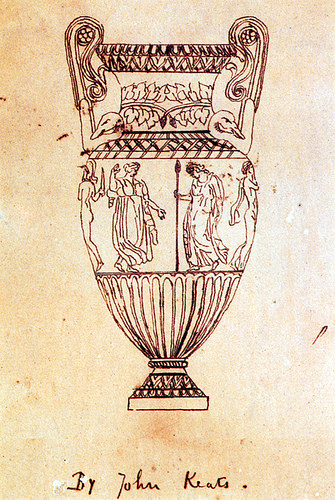 Is there a text in this class? That’s a famous line (and title) from reader-response literary theory, coming later in the semester. For the first two weeks of our exploration of critical theory, the answer to that question is decidedly: “yes, there is only text in this class.” Beginning with the New Criticism, one of the oldest of the critical/literary theories we will study, and then continuing into structuralism and deconstruction, scholars and critical readers focus thoroughly and rigorously and entirely on texts. Although those texts are produced by authors who live in various historical contexts and bodies, and are read by readers who also live in various and different historical contexts and bodies, New Critics, structuralists, and deconstructionists will exclude those other contexts and focus on (a refrain) “the text itself.”
 Creative Reading
You must be logged in to post a comment.